How to Store and Handle Custom Wrapping Paper So Every Roll Stays Gift-Ready
Custom wrapping paper stays gift-ready when rolls and sheets are kept boxed, dry, flat and out of direct sunlight until the day you wrap. At Customized Wrapping Paper, every order ships ready to use, and a few storage and handling habits protect the print, the edges and the finish of kraft, coated and foil stock through a whole season.
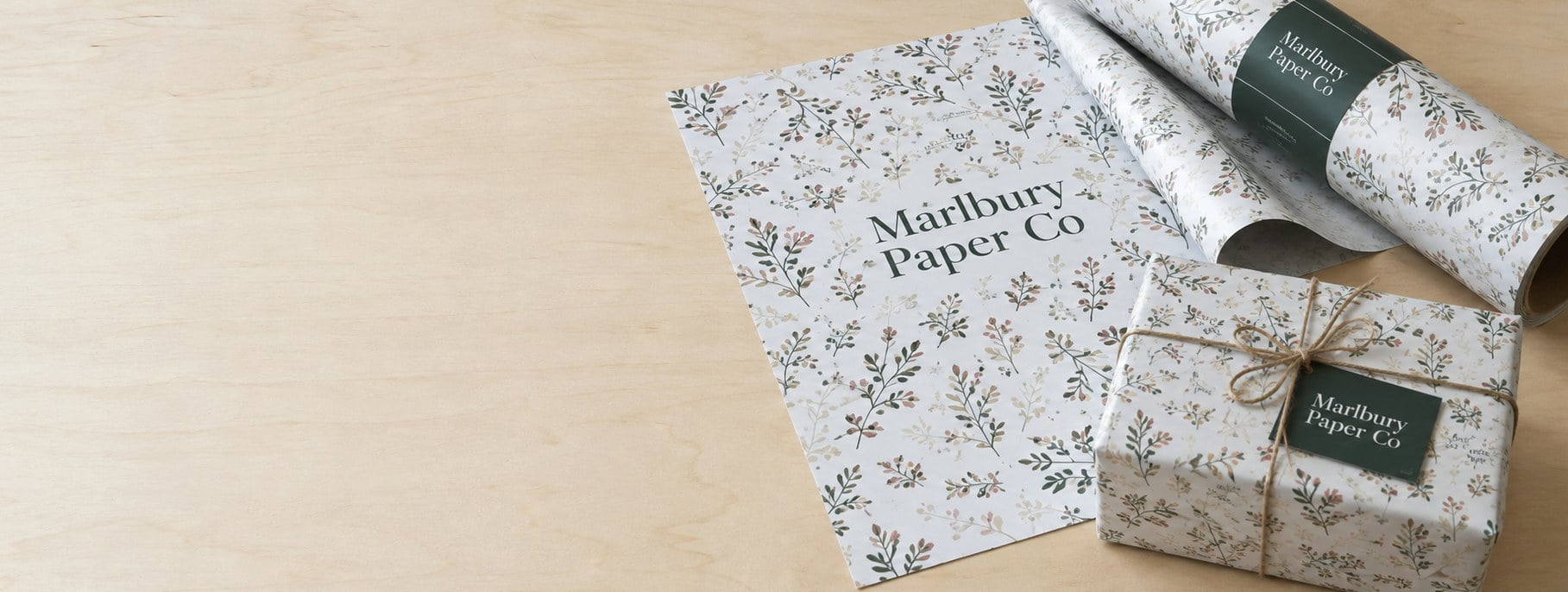
- Store rolls and sheets boxed, dry and out of direct sunlight
- Lay pre-cut sheets flat; never stand them on edge
- Foil shows every fold, so plan each crease once
- Reorders start from the approved file, with a mockup within 24 hours
- Minimum order of 12, about 2 weeks standard turnaround
How should you store custom wrapping paper rolls when the shipment arrives?
Store custom wrapping paper rolls on their sides or upright in their cartons, in a cool, dry room away from direct sun, heaters and outside walls. The goal is to keep each roll round, its edges clean and its print unchanged until the day you wrap. Most damage to wrapping paper happens in the first week, when cartons sit on a loading dock or a damp stockroom floor.
Open the cartons as soon as they arrive and check the rolls against your approved mockup. Then close the cartons again, label them by design, and move them off the floor onto a shelf. Rolls that lean against a wall for weeks can flatten on one side, which makes them wobble on a counter dispenser and wind unevenly.
- Keep rolls in the original carton or wrapped in their sleeve until they go on the counter.
- Shelve cartons off the floor and away from exterior doors.
- Keep one roll of each design out at a time and leave the rest sealed.
- Write the arrival date on each carton so older stock is used first.
If you ordered custom wrapping paper rolls in more than one design, a simple shelf label for each pattern saves staff from opening every carton to find the right one during a rush.
What is the best way to keep pre-cut wrapping paper sheets flat and crisp?
Pre-cut wrapping paper sheets stay flat when they are stored lying down in a stack, with a rigid board on top and nothing heavy or uneven pressing on them. Standing sheets on edge or rolling them up undoes the main advantage of sheets, which is that they come out ready to wrap with no curl to fight.
Keep the stack in its shipping box or in a shallow drawer under the wrap station. Pull sheets from the top only, and slide them out rather than dragging them across the stack, so the printed face does not scuff against the sheet below. If a sheet does pick up a crease, move it to the bottom of the pile for small gifts where the fold can be hidden.
Sheets also travel better than rolls for pop-up tables and events. A flat folder or portfolio case keeps a working supply clean, while the rest of the order stays in storage. Customized Wrapping Paper offers pre-cut wrapping paper sheets for exactly this kind of counter, where speed matters more than custom lengths.
How do humidity, heat and sunlight affect printed wrapping paper?
Humidity makes wrapping paper curl and soften, heat dries it out and can make coated surfaces tacky, and direct sunlight slowly fades printed colors. All three effects are gradual, so the paper often looks fine for weeks before the problem shows up on a wrapped gift. A stable, indoor room is the simplest protection.
Paper absorbs moisture from the air. In a damp basement or a stockroom next to a loading door, rolls can take on a wavy edge and sheets can bow at the corners. When the paper later dries out in a warm shop, it may shrink unevenly, which shows up as small ripples once it is taped around a box.
Sunlight is the slow one. A roll displayed in a window for a whole season can show a lighter band where light hit it every day, while the inside of the roll stays the original shade. If you want to display your custom paper, use a sample sheet or a wrapped dummy gift in the window and keep the working rolls out of the light.
| Condition | What you see | Simple fix |
|---|---|---|
| Damp storage | Wavy edges, soft paper, curl that will not relax | Move cartons to a dry interior room, off the floor |
| Heat near vents or lights | Brittle kraft, tacky coated surface | Store away from heaters, radiators and display lighting |
| Direct sunlight | Faded band on the outer layer of a roll | Keep rolls boxed; display a sample instead |
Does kraft, coated or foil wrapping paper need different care?
Yes. Kraft, coated and foil wrapping paper each have one weak point, and care is mostly about protecting that weak point. Kraft scuffs and can tear at sharp box corners, coated paper shows fingerprints and creases, and foil scratches and holds every fold line. The printing on all three is durable once wrapped, but each stock rewards slightly different handling.
Kraft
Custom kraft wrapping paper is forgiving with creases, which is why many shops like it, but its natural fibers drink up moisture faster than coated stocks. Keep it especially dry, and fold it with firm, clean creases rather than repeated pressing.
Coated printed paper
Coated custom printed wrapping paper gives the sharpest colors and the cleanest logo detail. Handle it with clean, dry hands, and avoid stacking heavy items on loose sheets, because pressure marks show on a smooth surface.
Foil and metallic
Foil and metallic wrapping paper looks the most premium and needs the most care. Unroll it on a clean surface, keep scissors and box cutters away from the face, and plan each fold once. A fold that is opened and redone leaves a visible line.
How can staff wrap faster without damaging custom wrapping paper?
Staff wrap faster and waste less custom wrapping paper when the wrap station is set up before the rush: a clean, dry surface, a sharp blade, tape that suits the stock, and the paper cut to the right size before the gift arrives. Most damage at the counter comes from rushing on a cluttered table, not from the paper itself.
- Wipe the counter so no dust, glitter or moisture transfers to the printed face.
- Use a sharp blade or straight-edge cutter; dull scissors chew the edge of coated and foil paper.
- Measure the box against the paper before cutting, so every gift uses one clean piece.
- Crease each fold once with a flat tool or the side of your thumb.
- Tape seams on the underside so the pattern on top stays uninterrupted.
A one-page wrap guide taped under the counter helps new seasonal staff. Include a photo of a correctly wrapped box, which side of the pattern faces up, and where the logo should land on the top of the gift. That last point matters with custom paper, because a centered logo is part of what makes the gift look branded rather than generic.
If your team also uses custom tissue paper inside the box, store it in its own flat container so it does not crumple between orders.
How long does custom wrapping paper stay in good condition?
Custom wrapping paper stays in good condition for a long time when it is kept boxed, dry and out of sunlight. There is no fixed expiration date on paper, so condition depends almost entirely on storage. A roll left in its carton in a stable room will look much the same next season as the day it arrived.
This matters for planning. Many businesses order a single design for everyday use and keep it on hand across several seasons, which is easier when each carton is protected. Seasonal or dated designs are different: they stay physically fine, but a holiday or event message may simply be out of date by the next year.
A good habit is to check stored cartons once at the start of each busy season. Unroll a short length from one roll, look at the color and the edge, and wrap a test box. If the paper still folds cleanly and the print matches your other materials, the stock is ready. If not, you have time to reorder, since Customized Wrapping Paper sends a free mockup within 24 hours and standard production takes about 2 weeks after approval.
What should you check before reordering wrapping paper to match leftover stock?
Before reordering wrapping paper to sit alongside leftover stock, check the condition of what you have, confirm which design file was approved, and note the stock and format of the original order. A matching reorder starts with the same artwork and the same paper choices, so having those details ready keeps the new rolls consistent with the old ones.
- Condition: Faded or curled leftovers will not match fresh paper, even from the same file. Use older stock for back-office or small gifts.
- Artwork: Send the approved file or reference the earlier order so the same repeat and colors are used.
- Stock and format: Note whether the original was kraft, coated or foil, and whether it came as rolls or sheets.
- Quantity: Reorders follow the same minimum of 12 as a first order.
Customized Wrapping Paper returns a mockup within 24 hours for reorders as well, with unlimited free revisions, and you pay nothing until you approve the design. Start through the custom quote form and mention the earlier order, or read how the ordering process works first.
Frequently asked questions
Why does my custom wrapping paper curl when I unroll it?
Custom wrapping paper curls because it has been wound on a core, and the curl is stronger near the center of the roll or after time in a damp room. Customized Wrapping Paper suggests unrolling a length and laying it face down under a flat weight for a short while, or reverse-rolling it gently, before cutting. Storing rolls in a dry room keeps the curl easier to manage.
Can foil wrapping paper be flattened after it gets creased?
Foil wrapping paper holds creases more firmly than other stocks, so a sharp fold usually cannot be fully removed. Pressing it under a flat weight can soften a light wrinkle, but a hard crease will still catch the light. The practical answer is to use creased pieces for small gifts where the fold sits on the underside, and to handle fresh foil with planned, single folds.
Which tape works best on coated custom wrapping paper?
Coated custom wrapping paper has a smooth surface, so a clear tape that peels cleanly and sits flat usually gives the neatest seam. Double-sided tape is popular for a seamless look because nothing shows on the outside. Test any new tape on an offcut first, since some strong tapes can lift ink or coating if a seam is ever repositioned.
Does printed wrapping paper rub off on hands or gift boxes?
Printed wrapping paper from Customized Wrapping Paper is meant to be handled, folded and taped without the design rubbing off in normal use. Problems usually come from moisture, such as damp hands or a wet counter, or from heavy abrasion during storage. Keeping the wrap station dry and storing sheets flat protects the print through the whole season.
Is kraft wrapping paper more likely to tear on sharp box corners?
Kraft wrapping paper can tear where a sharp box corner presses through, especially if the paper has dried out near a heater. Folding the corners with a firm, neat crease rather than stretching the paper prevents most tears. For rigid boxes with very sharp edges, wrapping with a little extra paper at each end gives the kraft room to fold without strain.
Can wrapping paper rolls be stored in a garage or basement?
Wrapping paper rolls can sit in a garage or basement only if the space stays dry and fairly stable through the year. Most garages swing between hot and cold and many basements are damp, which leads to curl, soft edges and uneven shrinkage. Customized Wrapping Paper recommends an interior closet or stockroom instead whenever one is available.
Should custom wrapping paper be kept in its plastic sleeve?
Custom wrapping paper is best kept in its original sleeve or carton until the roll goes into use. The sleeve protects the outer layer from dust, light and handling marks. Once a roll is on the counter, keep the remaining rolls sealed and boxed, and slide a used roll back into a sleeve or bag at the end of the season.
How do you cut custom wrapping paper without ragged edges?
Custom wrapping paper cuts most cleanly with a sharp blade drawn along a straight edge, or with a long pair of sharp scissors used in one smooth glide rather than short snips. Dull blades tear coated and foil stocks. A cutting mat under the paper protects the counter and keeps the blade from wandering off the line.
What is the best way to transport wrapping paper to an off-site event?
Wrapping paper travels best to an off-site event in a rigid tube or box for rolls, and a flat case or portfolio for sheets. Customized Wrapping Paper suggests packing only what the event needs, keeping the rest in storage. Avoid leaving paper in a hot or cold vehicle, and set up the wrap table out of rain, wind and direct sun.
Can a damaged outer layer of a wrapping paper roll be trimmed off?
A damaged outer layer of a wrapping paper roll can usually be trimmed away, since scuffs, sun fading and dents tend to affect only the first wrap or two. Unroll past the damaged length, cut cleanly, and use the trimmed piece for lining drawers or small gifts. The paper underneath is normally protected and matches the rest of the order.
Do seasonal staff need training to handle foil and metallic paper?
Foil and metallic paper rewards a short briefing for seasonal staff, because it shows fingerprints, scratches and refolded creases more than kraft or coated stock. A few minutes covering clean hands, single folds and blade-only cutting prevents most waste. Customized Wrapping Paper suggests keeping a practice offcut at the station so new staff can try a fold before wrapping a real gift.
Get a free mockup for your wrapping paper
Send your logo or idea and the quantity you have in mind. Customized Wrapping Paper returns a free mockup within 24 hours, you approve the design before anything is produced, and standard turnaround is about two weeks with faster options available. Get a custom quote.