The paper weight, the finish, and the artwork all matter, but the decision that quietly sets your budget on a custom wrapping paper order is the print method. Digital, flexographic, and gravure presses can all put your design on paper, yet they reach very different price points depending on how much you order. Choose the wrong one for your volume and you either pay a steep setup bill to print a few hundred feet, or you run a small digital job at a per-foot rate that never comes down. Here is how the three methods actually differ, and how order size should steer the choice.
The three presses, in plain terms
Digital printing lays ink or toner straight onto the paper with no plates or cylinders to make first. That means almost no upfront setup, which is why it wins on short runs. Its limits show up at scale: consumables get expensive as the footage climbs, and most digital presses cannot match spot Pantone (PMS) colors the way plate-based methods can, so a precise brand color may shift slightly.
Flexographic printing uses a flexible relief plate for each color, inked and rolled onto the paper at high speed. You pay to make a plate per color, but once the press is running the per-foot cost drops sharply. Flexo handles solid colors and simple repeats well; very fine detail and long lists of colors are harder to hold cleanly.
Gravure printing etches your artwork into an engraved metal cylinder, one per color. The cylinders are the most expensive setup of the three, but they print enormous footage at consistent quality and hold fine detail and rich solids that flexo struggles with. It is a long-run method, full stop.
Where the crossover happens
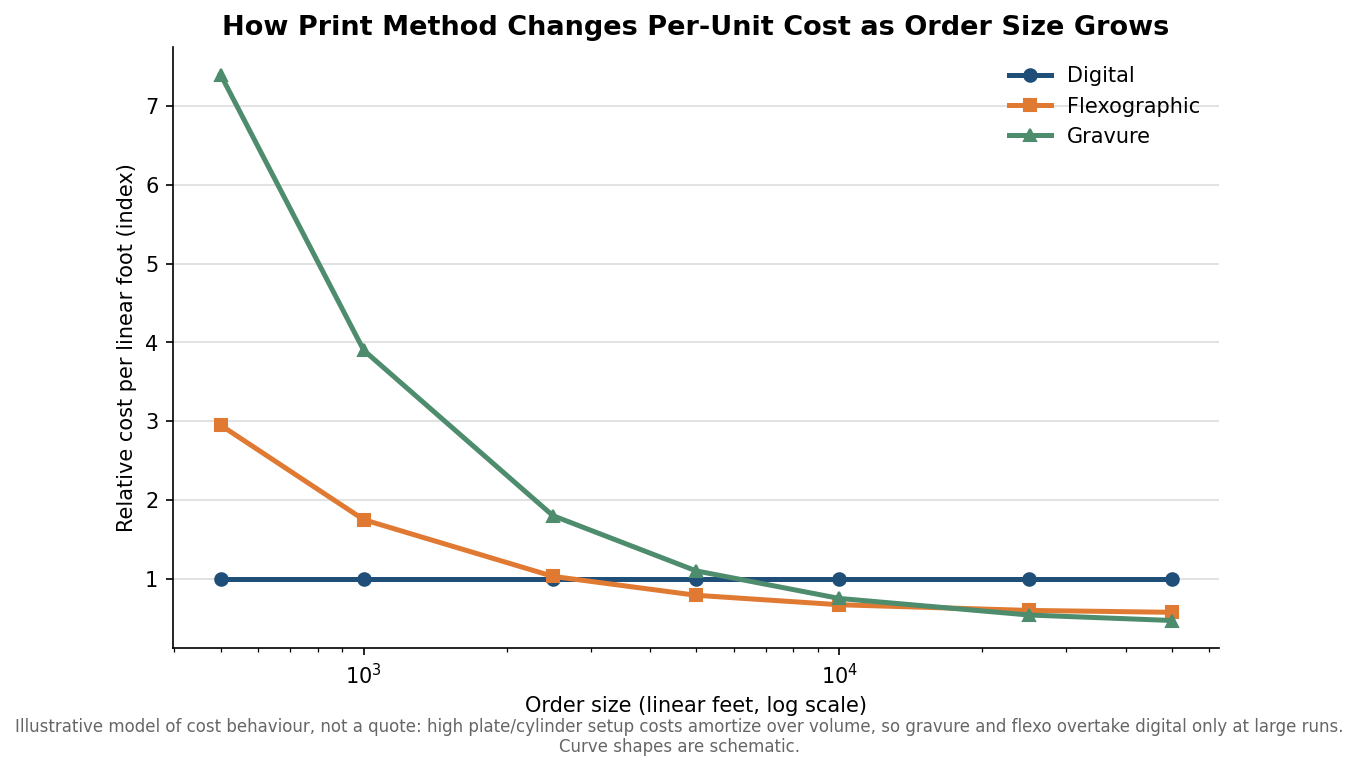
The chart above is the whole argument in one picture. Digital’s line is nearly flat: little setup, steady per-foot cost. Flexo and gravure start high because a few hundred feet has to absorb the entire plate or cylinder bill, then fall away as that fixed cost spreads across more paper. Somewhere in the low thousands of linear feet the plate-based methods cross under digital and keep dropping. The exact crossover depends on your color count and design, but the shape is always the same.
That crossover is why custom gift-wrap converters quote large minimums. It is common to see a practical minimum around 10,000 linear feet per design for flexo or gravure work; printers will run less, but the per-foot price will not fall proportionally because the setup is already spent. If you need a few hundred feet for a boutique or a single event, digital is almost always the sensible answer even though its unit rate looks high, because you skip the setup entirely.
Setup costs are the hinge
The reason the methods diverge is entirely in the setup. Digital has essentially none. Gravure cylinder engraving is frequently quoted in the range of $275 to $800 per color, so a four-color design can carry well over a thousand dollars in cylinders before a single roll prints. Flexo plates sit between the two extremes. None of that setup is wasted on a big run, where it disappears into the footage, but on a small run it dominates the invoice. When you compare quotes, separate the one-time setup from the per-foot rate so you can see how the total behaves at your actual quantity rather than at the printer’s ideal quantity.
Weight and finish still shape the quote
Print method decides your economics, but paper weight decides how the finished wrap feels and what it can do. Lighter stocks fold and tuck more easily and cost less per foot; heavier stocks resist tearing and carry ink with more depth.
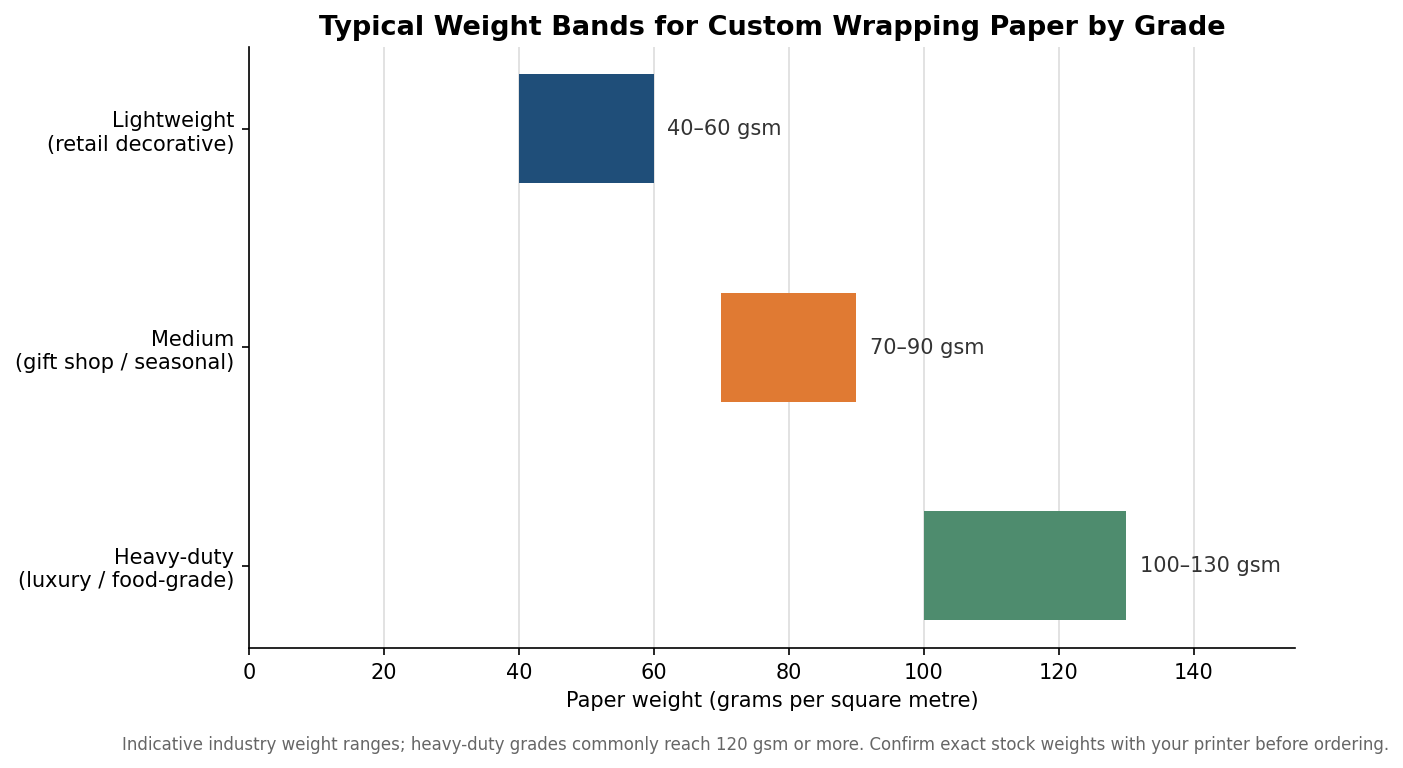
As a rough guide, decorative retail wrap runs light, everyday gift-shop and seasonal paper sits in the middle, and luxury or food-contact grades run heaviest, with the heaviest grades commonly reaching 120 gsm or more. Heavier paper also takes coatings and foils more predictably, so weight and method are worth deciding together rather than in sequence. Standard custom roll widths cluster around 24 and 30 inches, with in-store bulk rolls reaching several hundred feet each, so confirm both the width your wrapping station needs and the roll length that matches your turnover.
How to decide for your order
Start from the quantity you will genuinely use in a year, not the quantity that unlocks the best unit price. If that number is in the hundreds or low thousands of feet, print digital, accept the higher per-foot rate, and keep your cash free. If you reliably move tens of thousands of feet of a stable design, a plate-based method pays for its setup quickly and then keeps saving you money on every reorder, so flexo or gravure becomes the better long-term home for that pattern. Many brands land in a hybrid: gravure or flexo for the one or two evergreen designs they reorder constantly, and digital for seasonal or limited runs where the setup would never pay back.
Whatever you choose, ask any printer to quote the setup and the per-foot rate as separate lines, and to price your real quantity rather than the next bracket up. Lead times swing with the season, so if you need paper for a holiday push, work backward from your in-hand date and add margin. The method that looks cheapest on a spec sheet is rarely the one that is cheapest for the amount you are actually going to print.