A brand can spend weeks perfecting a custom wrapping paper design and still hand customers something that goes straight to landfill. The finishes that make gift wrap look expensive, foil, glitter, and high-gloss coatings, are exactly the ones that disqualify it from recycling. If you want wrap that reads as premium and can still go in the curbside bin, the decision happens on the spec sheet, long before the first roll prints. This is a guide to getting that decision right.
What quietly makes wrapping paper un-recyclable
Plain printed paper is recyclable almost everywhere. What breaks that is anything non-paper bonded to the surface. Metallic and foil finishes are a thin layer of aluminum or plasticized film laminated to the sheet, and paper mills cannot separate it from the fiber. Glitter is loose plastic; it does not just fail to recycle, it contaminates whatever batch it lands in. Gloss coatings are typically a film of polypropylene or a plastic laminate applied for shine and water resistance, and that same barrier is what stops the fiber from breaking down in a pulper. Velvet or flocked textures add a synthetic pile with the same problem. The uncomfortable part for buyers is scale: a single contaminated item can send an entire bale of otherwise-recyclable paper to disposal, which is why municipal programs are cautious about accepting decorative wrap at all.
The practical takeaway is that recyclability is decided by the finish, not by the fact that the substrate underneath is paper. A gorgeous foil-stamped sheet is, for recycling purposes, closer to a plastic wrapper than to a kraft roll.
The two tests your customer will run without thinking
Households sort wrap with two quick tests, and it is worth designing so your product passes them. The scrunch test is the common one: crumple the paper into a tight ball, and if it holds its shape it is likely pure paper and recyclable, while laminated or plastic-coated sheets spring back open because the film has memory the fiber does not. The rip test is the backup: tear the sheet and look at the edge, because clean paper fibers mean it is recyclable, while a visible shiny plastic layer or a stubborn, stretchy tear means it is not. You cannot control which test a customer uses, but you can make sure your wrap passes both by keeping the surface free of film lamination. A wrap that fails the scrunch test in someone’s hands also tends to fail at the sorting facility.
Weight is a spec, not a proxy for quality
Buyers often equate heavier stock with a better product, but basis weight and recyclability are separate questions. Uncoated kraft and matte litho gift wrap sit in a moderate weight range and recycle cleanly; the heaviest stocks on the shelf are usually the coated and foil-laminated ones, which are the hardest to recycle. Choosing a heavier sheet for a premium feel can quietly move you into a finish that will not go curbside.
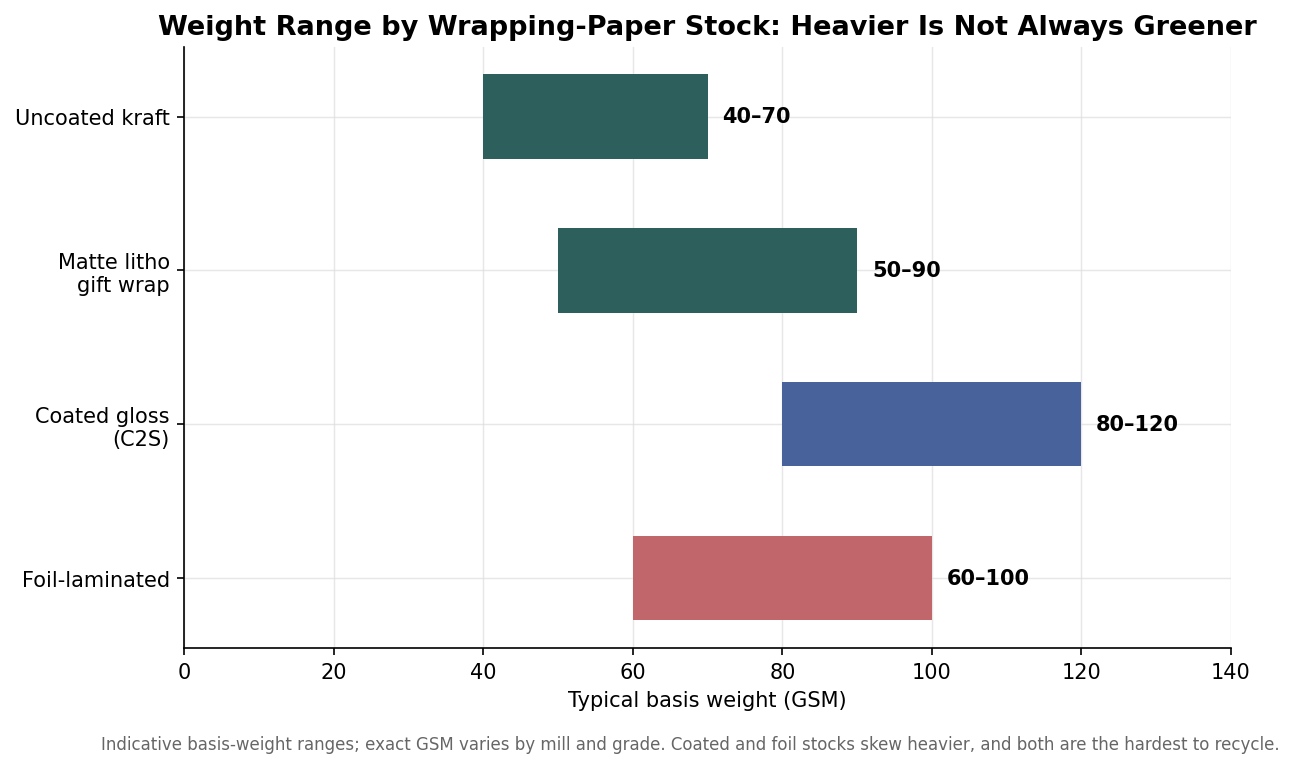
The lesson from the ranges above is to specify weight for the job, drape, tear resistance, and how it takes ink, rather than reaching for the heaviest option as a shortcut to looking upscale. A well-printed 70 to 90 GSM uncoated sheet can feel every bit as considered as a coated one, without the disposal penalty.
What FSC, recycled content, and “compostable” each actually promise
These three labels get used interchangeably in marketing, and they mean different things. FSC certification speaks to sourcing: it certifies that the pulp came from responsibly managed forests. It says nothing about whether the finished product can be recycled, because a sheet can be FSC-certified and then coated or foiled into something no facility will accept. Recycled content is about what went into the paper, the share of post-consumer fiber in the sheet, which is a separate lever from whether the sheet can be recycled again afterward. Compostable is a third thing entirely, usually meaning uncoated paper with no synthetic additives that can break down in a composting environment; plain kraft and untreated tissue often qualify, while anything coated does not.
The chart below shows why buyers should treat recycled content and end-of-life recyclability as two different columns on the spec sheet rather than one green checkbox. Recycled kraft scores well on both, but a stock can carry recycled fiber and still be hard to recycle again if it is coated.
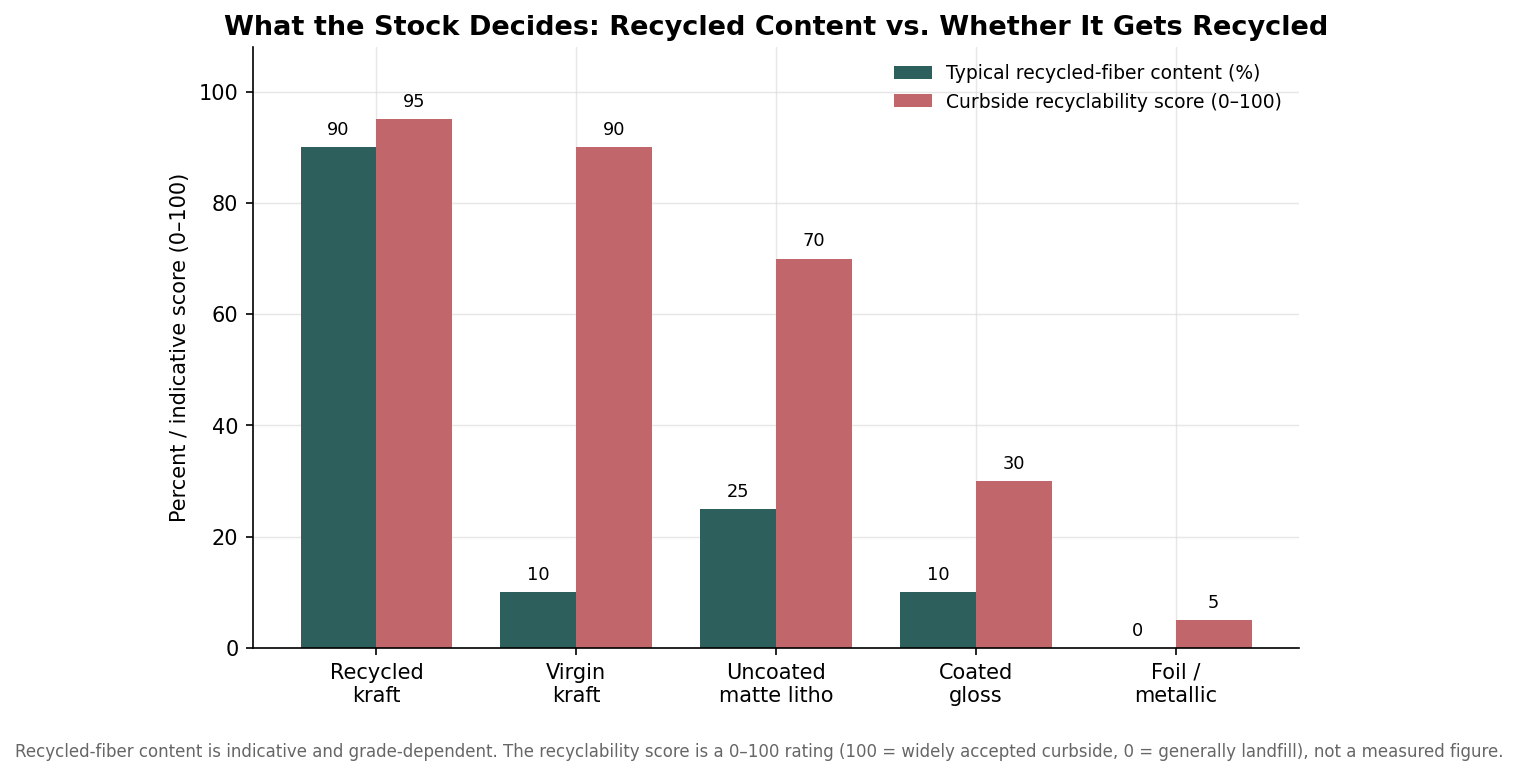
If sustainability is part of your brand promise, decide which claim you are actually making, responsible sourcing, recycled input, or curbside recyclability, and specify the paper that earns it. Claiming all three when the finish undercuts the last one is the kind of thing customers and regulators increasingly notice.
How to specify a recyclable wrap that still looks premium
Start with an uncoated substrate: kraft for a natural look, or a bright uncoated litho sheet when you need clean white ground for color. Both recycle without special handling, and kraft is often compostable as well. Keep the decoration in the ink rather than in the finish. Water-based or soy-based inks printed on uncoated stock hold rich color and do not compromise recyclability the way a plastic laminate does. A full-flood ink coverage is fine; it is the film on top, gloss lamination, foil, glitter, that causes the problem, not the amount of ink. If you want a tactile lift, reach for an emboss, a die-cut edge, or a matte spot varnish that is water-based rather than a plastic film, and confirm with the printer that the varnish is repulpable.
Two finishing details ride along with the paper choice. Tape in small amounts is generally tolerated in the recycling stream, so you do not need to obsess over it, but ribbons, bows, and plastic string should be sold or packed separately because they tangle sorting machinery and have to be removed by hand. And put the whole thing in writing: name the substrate, the GSM, the ink system, the coating if any, and the claim you intend to make, so the sample you approve is the product you receive. A recyclable wrap that looks premium is entirely achievable; it just has to be specified on purpose rather than hoped for after the fact.